We offer tree pruning and tree trimming services in Dublin and Co. Wicklow, Ireland. Call 085 177 5500 or contact us for a free quote.
In arboriculture to ‘prune’ trees means to remove diseased, unproductive or unwanted portions from them. Nine times out of ten, the goal of your typical Dublin homeowner is to increase light into their home or garden. Reduction of a trees height and spread can help resolve issues of poor light.
Tree surgeons make use of pruning techniques to reduce the size of trees. Preserving the shape and form of a tree is a primary objective of our work. Similarly some trees can grow unruly, sporting long stems or branches which look out of place and a good haircut can often restore their visual appearance.
Pruning Cuts
A correctly made pruning cut should heal or ‘compartmentalise’ over time (see image below). Gradually, and with each passing year, the open wound will seal over until the exposed heartwood is no longer visible. All that remains of a compartmentalised wound is a slight protuberance or bulge or in the cases of softer woods, a dimple.
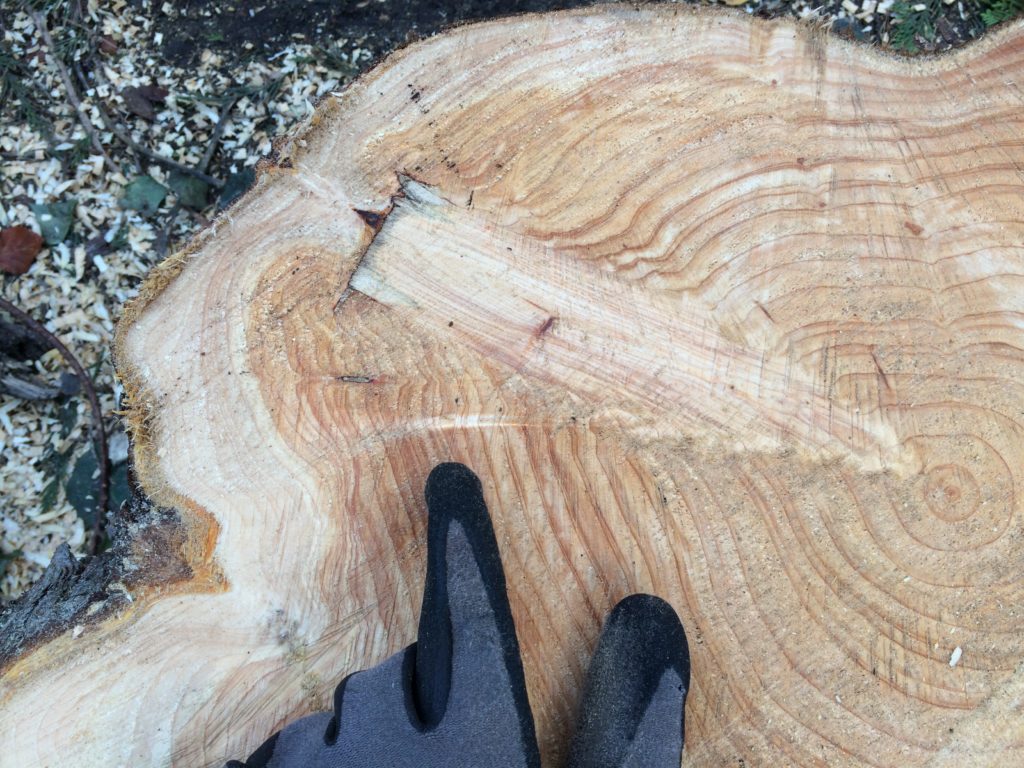
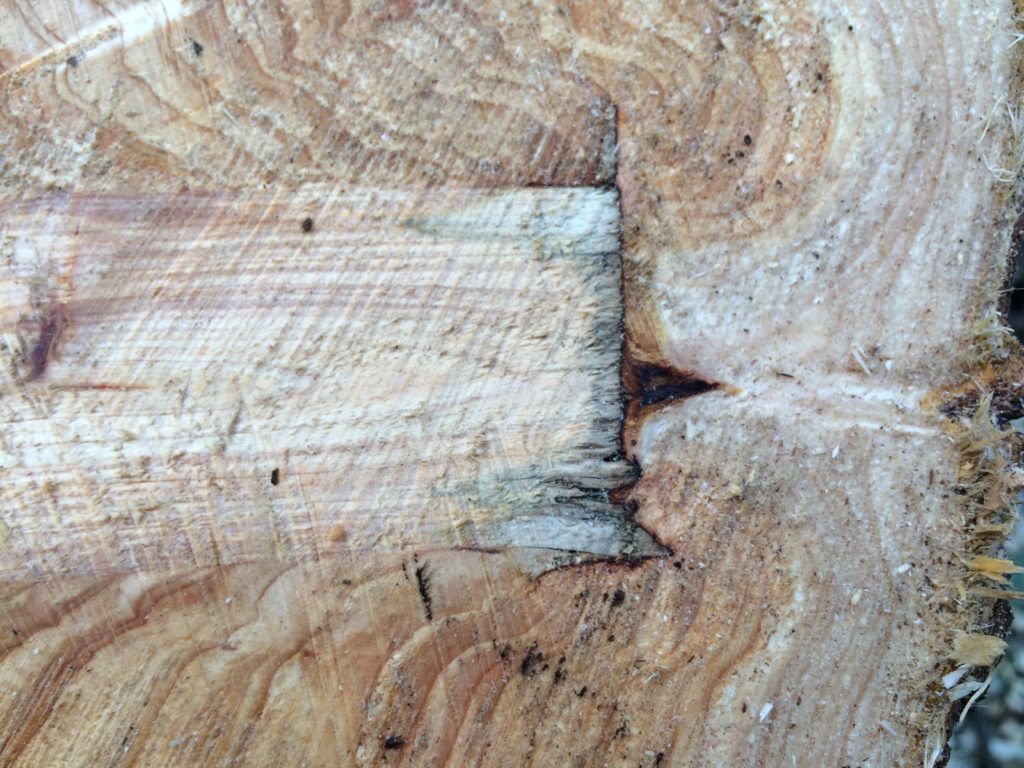
Improperly pruned trees may be unable to compartmentalise the wounds. For instance, if the wound is too close to the stem or too far up the branch, compartmentalisation may not take place or may take considerably longer than normal to seal the wound.
Wounds which remain open can allow wood decay insects or their larvae, fungal spores and other biotic pathogens to enter the tree, risking colonisation of larger areas of heartwood and cellular decay of important structural tissue. Even if the wound eventually callouses over, there may be a much larger decay pocket contained within which could have otherwise been smaller or unavoidable.
Tree topping, crown reduction and pollarding
Some customers search for tree topping when they want a tree made smaller, brought away from a building or opened up for more light. In most cases, topping is not good pruning practice. It can leave large wounds, encourage weak regrowth and spoil the natural structure of the tree.
Where possible, Crown Tree Services will look at crown reduction, selective pruning or height reduction cuts that suit the species, condition and location of the tree. Where a tree is unsuitable for its position, removal may be the better long-term option.
Pollarding is different from topping. It is a managed pruning system where a tree is cut back to the same points on a regular cycle, producing a repeated framework of regrowth. Some species can tolerate pollarding when it is started correctly and maintained, including willow, lime, London plane and some poplars. It is not suitable for every tree, and late or irregular pollarding on mature trees can cause stress, decay or poor regrowth.
Crown Reduction
With a crown reduction, my goal is to reduce the size of the tree in a balanced fashion while preserving its basic form where possible. In ideal circumstances, the end result should not greatly alter the tree’s original appearance.
Of course, ideal circumstances don’t necessarily reflect how a tree has grown in reality. Achieving a balanced result is not always straightforward when you consider the different variations of tree form, shape and size. We still make an effort to achieve as balanced and natural-looking a result as possible, working with the tree’s existing form. For smaller garden trees, fruit trees and ornamental trees, see our page on small tree pruning in Dublin.
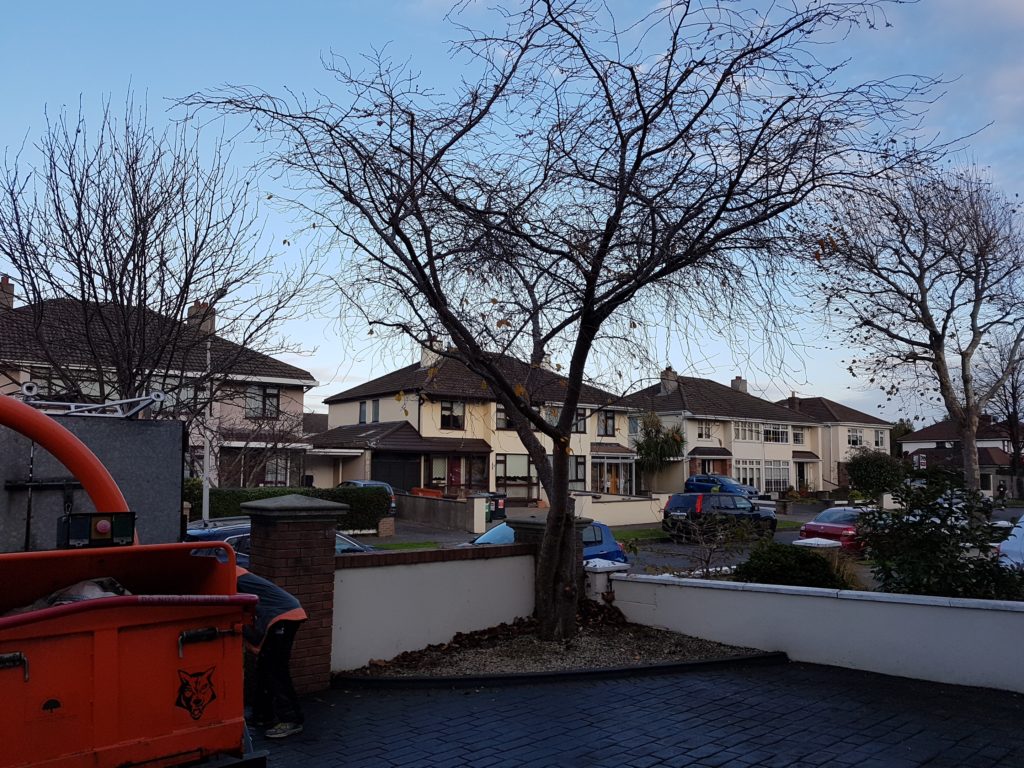
Additional Notes On Properly Pruning Trees In Ireland: Timing, Species and Pruning Severity
In arboriculture, pruning is the practice of removing diseased, non-productive or otherwise unwanted portions from a tree. If performed incorrectly, poorly or too severely, the regenerative portion of the branch may be unable to properly compartmentalise the wound, leaving the tree more vulnerable to decay and decline. In turn, the wound remains open, acting as a port of entry for decay bacteria, spores or wood-eating insects. Fungal colonisation can then follow, leading over time to decay of vital heartwood tissue and possible structural destabilisation.
The correct pruning approach also depends on the species, age, condition, time of year, recommended pruning window and previous pruning history of the tree. Some trees tolerate moderate pruning well, while others respond badly to heavy cutting or poorly timed work. Where a tree has already been cut hard in the past, the next pruning decision often needs to be more careful rather than more severe.
It should be noted that some trees, including birch, maple and alder, can be expected to produce reactive growth when cut back. If the current size of the tree suggests reduction is warranted, it may still be necessary to open the proverbial can of worms in order to reduce the crown to a more suitable scale for the garden. Reactive growth, especially when vigorous, can alter the natural growth pattern of an unpruned birch, maple or alder, producing a much denser crown than in its previous state. If the aim is to retain the tree at a more manageable scale, the process may need to be repeated at future intervals.
Reference: Trees Prone to Strong Reactive or Epicormic Growth After Pruning
Some trees are more prone than others to producing strong, vigourous, reactive, epicormic or watershoot growth after reduction or heavy pruning. Response varies by species, age, condition, season, exposure and pruning severity, so this list should be read as a guide rather than a rule.
- Lime / linden — Tilia spp.
- Willow — Salix spp.
- Poplar — Populus spp.
- Plane — Platanus × hispanica
- Alder — Alnus spp.
- Birch — Betula spp.
- Maple / sycamore — Acer spp.
- Horse chestnut — Aesculus hippocastanum
- Ash — Fraxinus excelsior
- Robinia / false acacia — Robinia pseudoacacia
- Eucalyptus — Eucalyptus spp.
- Hornbeam — Carpinus betulus
- Beech — Fagus sylvatica
- Cherry / plum — Prunus spp.
- Oak — Quercus spp.
Strong regrowth does not automatically mean pruning was wrong. It does mean the likely response of the species should be considered before deciding how hard to cut, and repeat pruning may be needed if the aim is to keep the tree at a smaller scale.
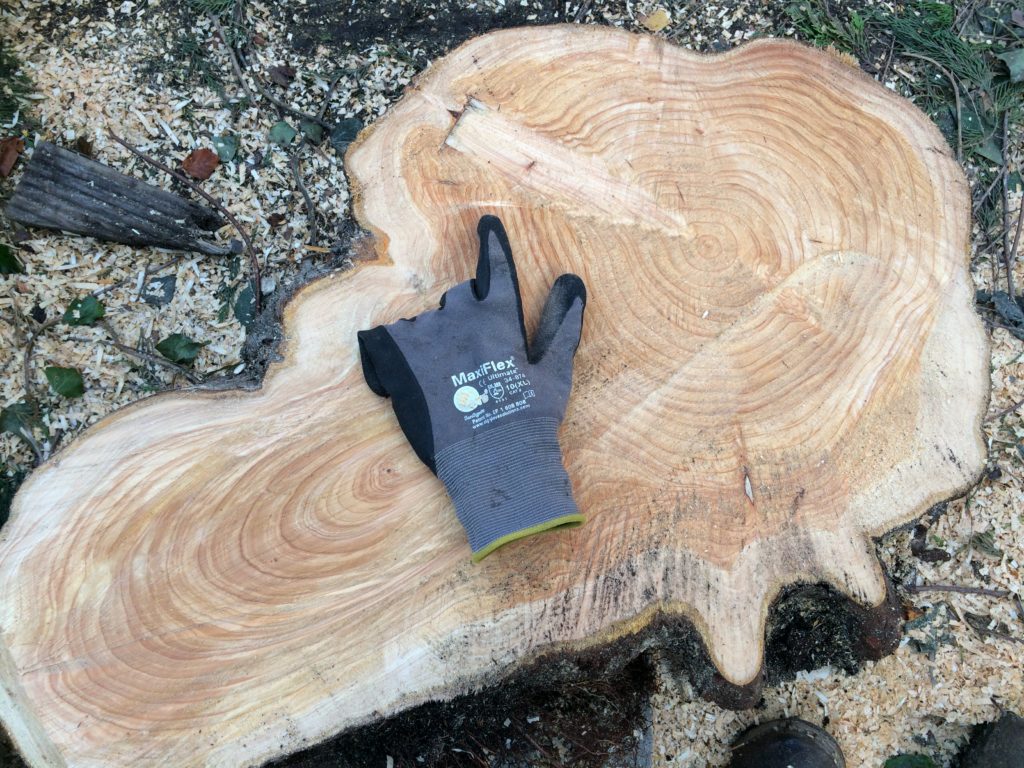
Improper Pruning
Pruning trees incorrectly or during the wrong stage of their growth cycle may stress a tree into a state of vigorous reactive regrowth, tree decline and in the worst cases, tree death. At times it can be OK to prune some hardier tree species more aggressively throughout the year however other trees will be better attended to during the dormant season and other trees again will require pruning at different times of the year.
In Ireland, dormancy occurs in the winter months, generally between late November and early spring. The best time to prune still varies by species, condition and pruning objective: crown reduction, clearance, fruit-tree pruning, deadwood removal and remedial work on previously cut trees may not all be approached in the same way or at the same time. Nesting birds must also be considered before tree or hedge work is carried out. Contact a reputable Dublin tree surgeon for advice on how and when to prune your tree properly. Contact us or call 0851775500 to find out more.
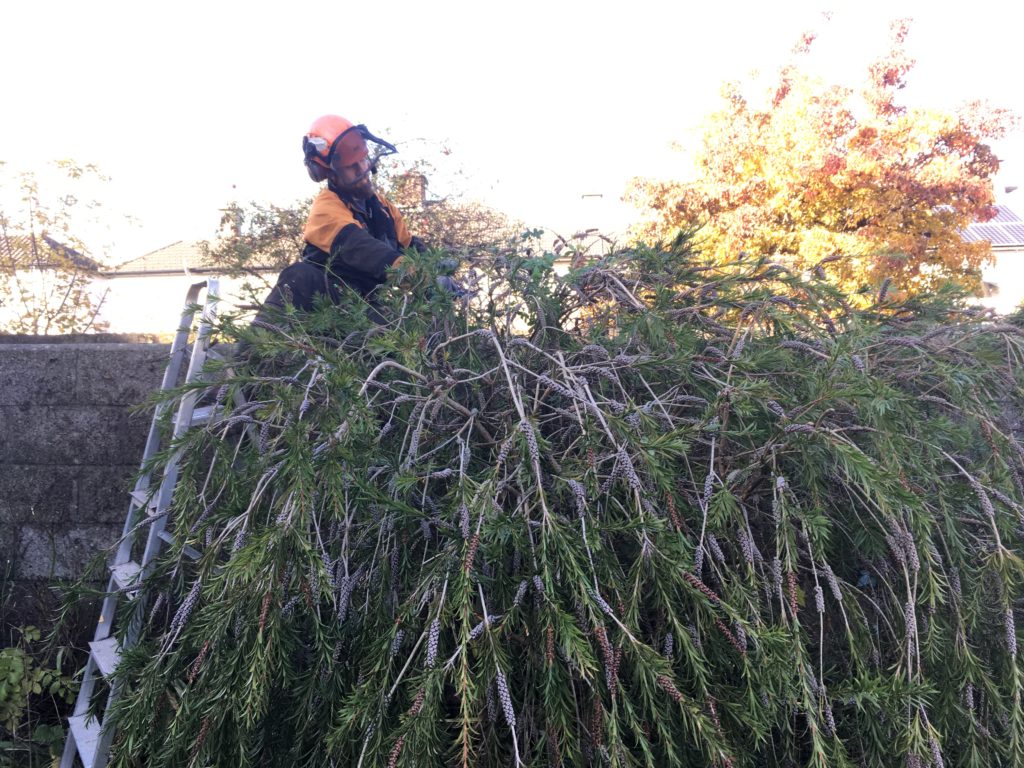
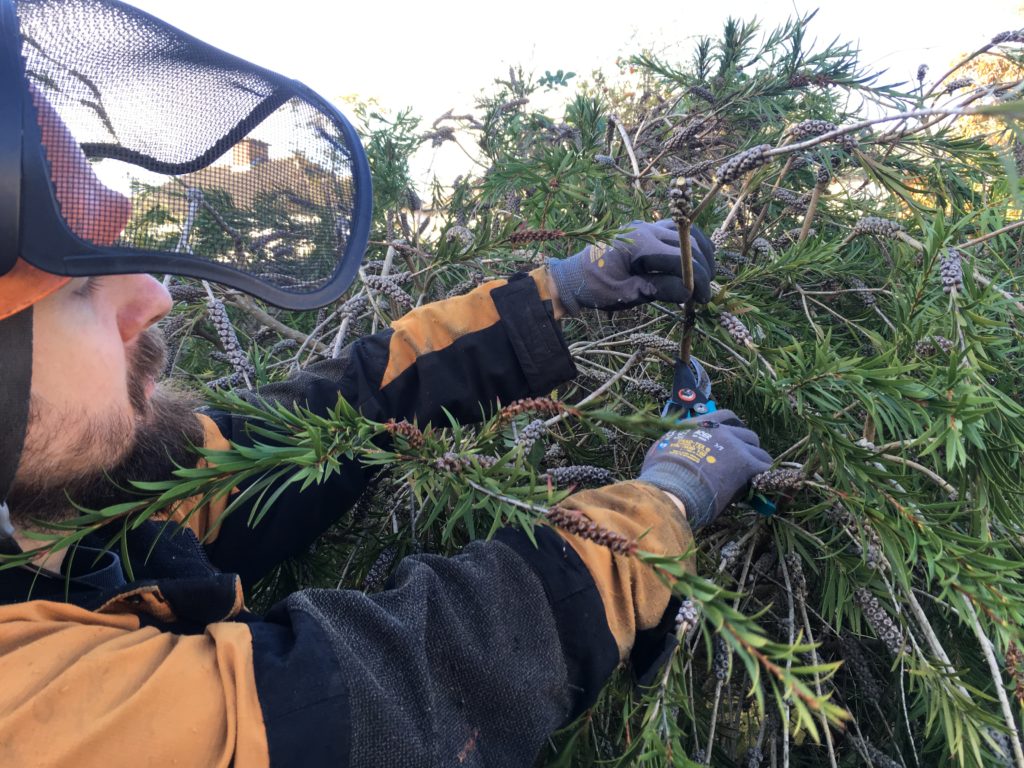
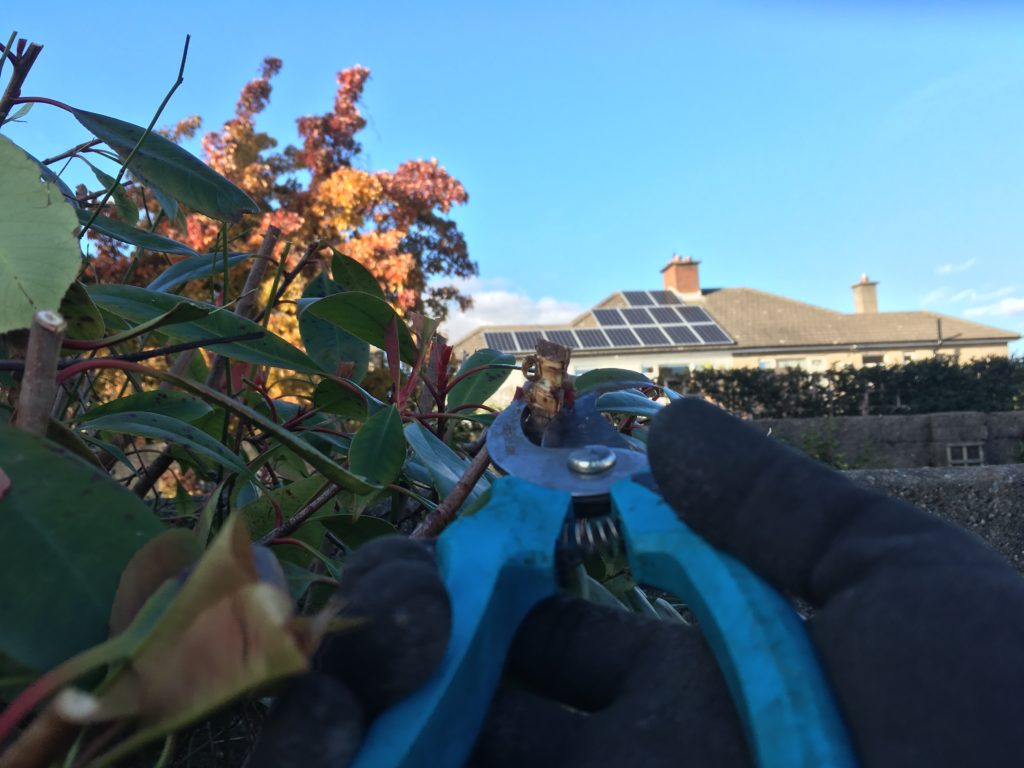
The correct time of year to prune trees in Ireland varies with differing species of tree. It’s best to consult with a reputable Dublin based tree service provider such as Crown Tree Services to avail of advice in relation to pruning.
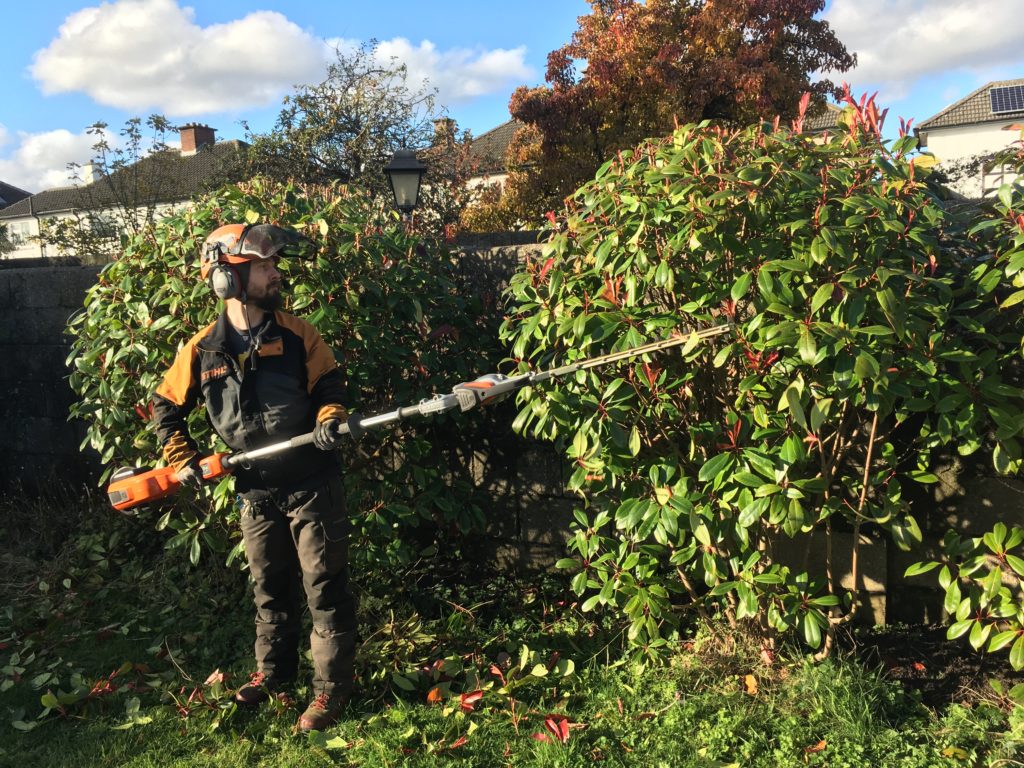
Call now and be confident that our tree pruning is completed using only correct tree cutting techniques. With rare exceptions tree pruning should always help facilitate rapid compartmentalization of wounds, which in turn lessens risk of wood decay pathogens entering the tree. Extensively decayed tissue can compromise tree health and stability.
Tree Pruning in Dublin and Co. Wicklow
We are professional tree surgeons that provide tree pruning and tree trimming services to the wider Dublin area and north Co. Wicklow. Our main areas of service are Dublin 14, Dublin 16, Dublin 18, Balinteer, Bray, Blackrock, Booterstown, Cabinteely, Carrickmines, Cornelscourt, Dalkey, Deansgrange, Delgany, Dundrum, Dun Laoghaire, Enniskerry, Foxrock, Goatstown, Glasthule, Glenageary, Greystones, Killiney, Kilternan, Kilmacud, Monkstown, Sandyford, Shankill, Stepaside and Stillorgan. If you are outside the Dublin area and need a tree surgeon, we will do our best to provide a timely site visit and quote.