We provide tree services including pruning, crown reduction, tree removal, hedge cutting, wood chipping and related tree surgery work across Dublin, Bray and North Wicklow. The sections below give a brief outline of the main services and techniques involved.
Tree services and pruning techniques we provide
- Tree Pruning
- Planting
- Felling
- Overhanging Branches
- Wood Chipping and Branch Shredding
- Crown Lifting
- Crown Reduction
- Crown Thinning
- Hedge Cutting
- Tree Removal
- Stump Grinding
For advice on pruning, reduction, tree removal or related tree work, please get in touch.
Pruning
This is the careful practice of removing diseased, non-productive and otherwise unwanted branches from a tree. Pruning may also involve selective reduction to improve structure, manage size, remove defects or maintain the amenity value of a tree. It’s important to prune at the right time of the year to reduce the risk of biotic pathogens infecting your tree. Correctly timed pruning helps to ensure birds aren’t disrupted during nesting season.
Pruning trees incorrectly, excessively or during the wrong stage of their growth cycle may cause them stress. This can manifest as vigorous reactive regrowth, tree decline or in some cases can be connected to tree death. Some trees tolerate pruning at different times throughout the year, while others are best pruned during dormancy or within a more specific seasonal window. Dormancy occurs in the winter months between late November to early spring. Other trees will require pruning at different times of the year.
The correct time of year to prune trees varies with differing species so please consult with a reputable Dublin based tree surgeon such as Crown Tree Services. We’re here to help you with advice in relation to tree pruning. Click here for a more in depth description of pruning.
Crown Tree Services also specialise in small to medium sized tree pruning, where mindful branch selection, timing and restraint matter more. For more detailed work on fruit trees, ornamental trees and smaller garden trees, see small tree pruning.
Tree Planting Services
We select young trees from a reputable Dublin nursery for planting in your garden. Crown Tree Services are here to help provide advice on selecting a suitable tree for your specific set of circumstances. Trees are supplied and installed by Grange Growers of Kilternan. Contact us for more details or click here for a more in depth description.
Tree Felling Services
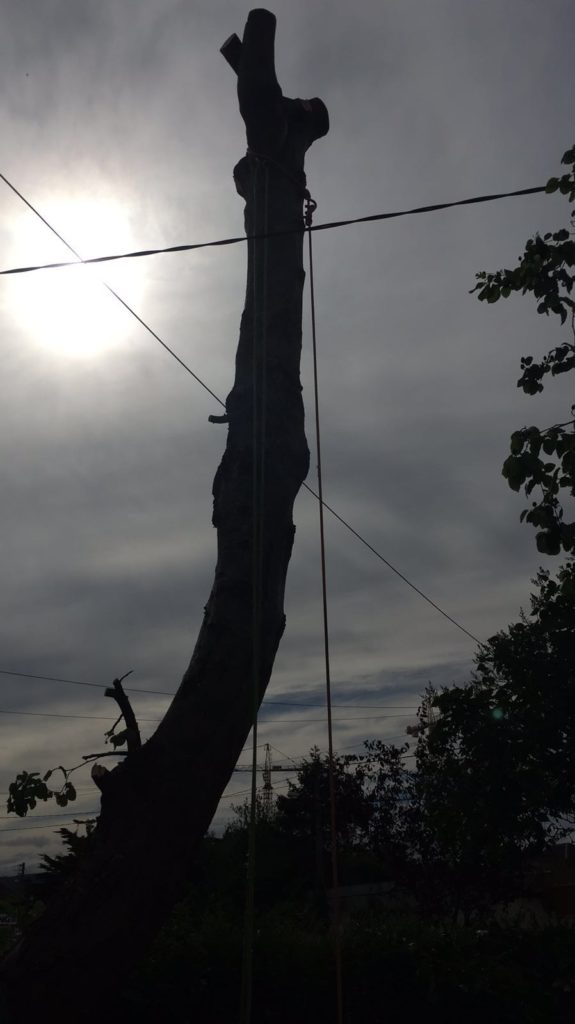
Tree felling is the cutting down or dismantling of entire trees. Where there is enough space, a tree can occasionally be felled in one piece. However, thought must be given to possible impact damage, underground services and whether a smaller suburban garden has sufficient space for safe felling.
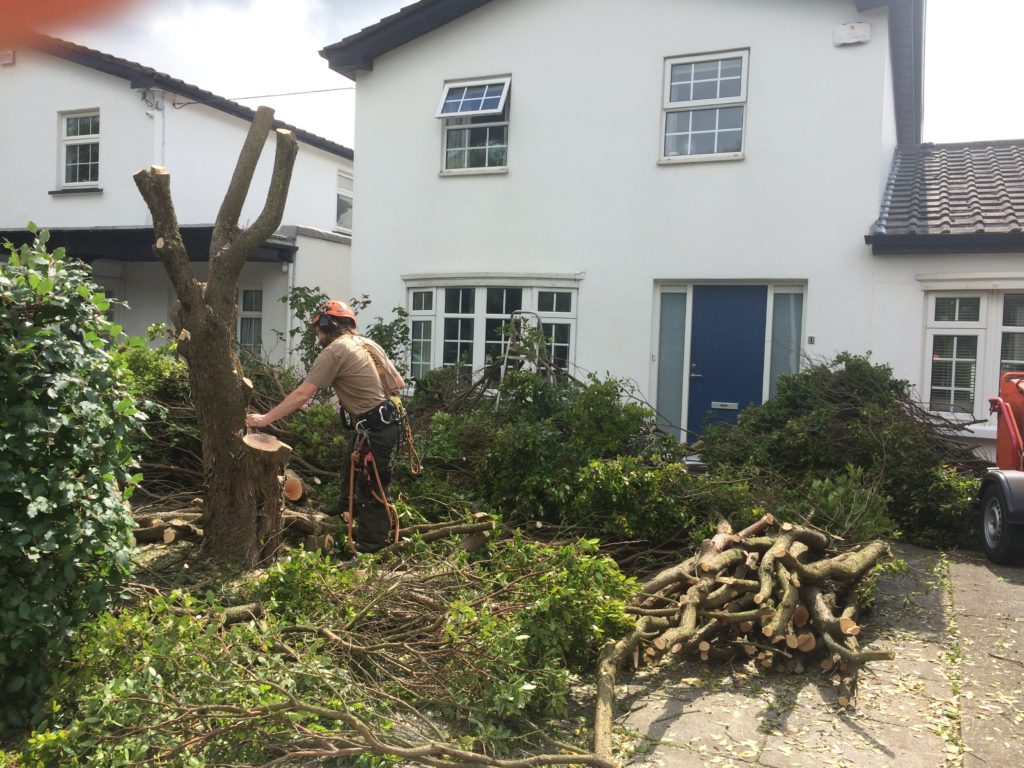
In more restricted gardens, trees often need to be dismantled in sections, with branches, brash and timber lowered in a controlled way using ropes, pulleys and other specialised rigging equipment.
We usually remove all green and woody material; however, we can also provide a log splitting service. Let us know in advance if you would like to keep suitable timber for firewood.
Tree felling may be required where a tree is dead, storm-damaged, structurally compromised, badly positioned relative to structures, too large or otherwise unsuitable for the space it occupies. The method used will depend on the size, condition and location of the tree, particularly in relation to buildings, boundaries, services and other potential targets.
Click here for a more detailed description.
Wood Chipping Services
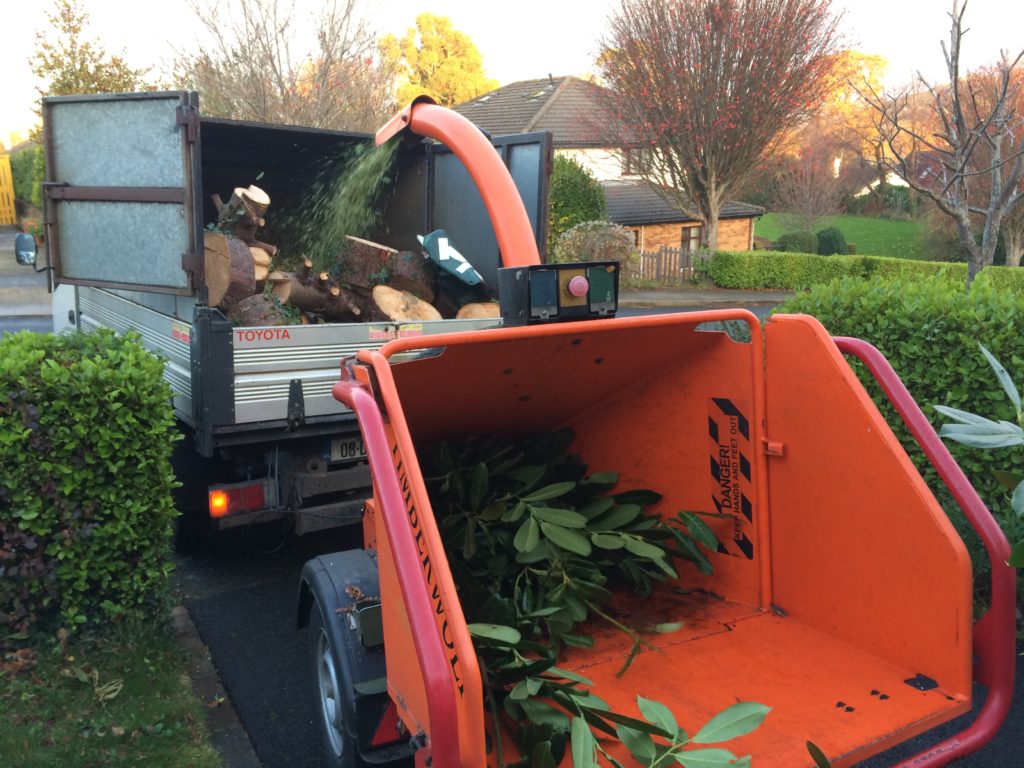
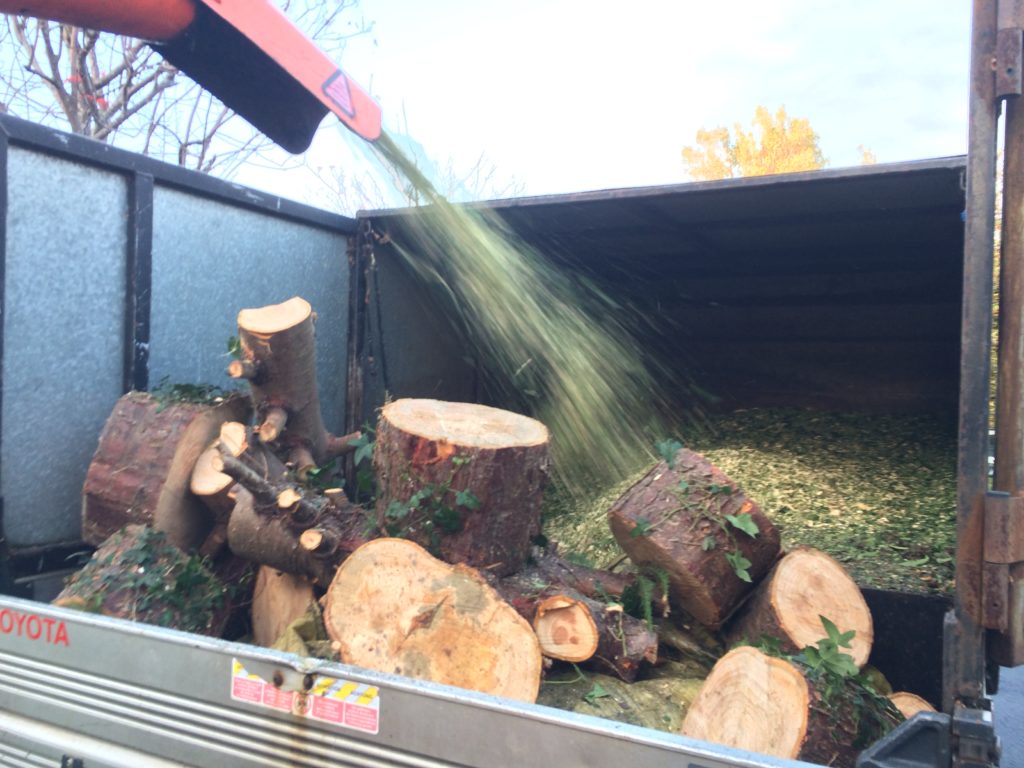
Wood chipping is the conversion of boughs and branches from felled or pruned trees into wood chips.
Wood chipping and branch shredding are used where branches have already been cut and need to be reduced for removal, disposal or reuse on site. This is typically carried out following tree work or clearance, where branches and brash need to be reduced for removal.
If you have a pile of recently cut branches or a tree you have felled yourself, give us a call for a free wood chipping estimate. Wood chipping can be carried out on site as part of larger works, or as a standalone job where branches or brash have already been cut and require processing or removal.
Wood chips can be useful in mulching applications. Wood chip can also be useful for weed suppression and as ground cover under trees where appropriate. Fresh wood chip is generally unsuitable for spreading directly among young plants or delicate beds. Call us now if you would like to discuss more about this service.
Crown Raising
Crown raising, also called crown lifting, involves removal or reduction of selected lower branches to increase clearance beneath the crown. It can be useful where lower growth restricts access or is in contact with overhanging roofs, paths or pavements, or contributing to excessive shade beneath the tree.
Where the issue is low canopy rather than overall height, crown lifting may be more appropriate than height reduction. In some cases, crown thinning or crown reduction may be used in combination with a crown lift to avoid leaving the tree top-heavy and to help lessen sail and manage wind loading.
Crown lifting and lower branch removal
Crown lifting should be approached with care because it can create a change that cannot easily be undone. Lower branches are not just visual clutter. On many trees, particularly open-grown garden trees, they contribute to the tree’s balance, movement and mechanical behaviour. They add weight and structure lower in the crown, help moderate how the tree moves in wind, and form part of the shape around which the stem and root system have developed.
Once substantial lower branches are removed, the tree is left with a longer bare stem and a crown carried higher above the ground. The remaining upper crown will continue to grow and add weight, which can leave the tree more top-heavy over time. For this reason, crown lifting should usually be limited to what is necessary for clearance, access or practical use of the space beneath the tree, rather than carried out simply to “tidy up” the lower crown.
Crown lifting diagram showing selected lower branches removed to increase clearance beneath a tree canopy.
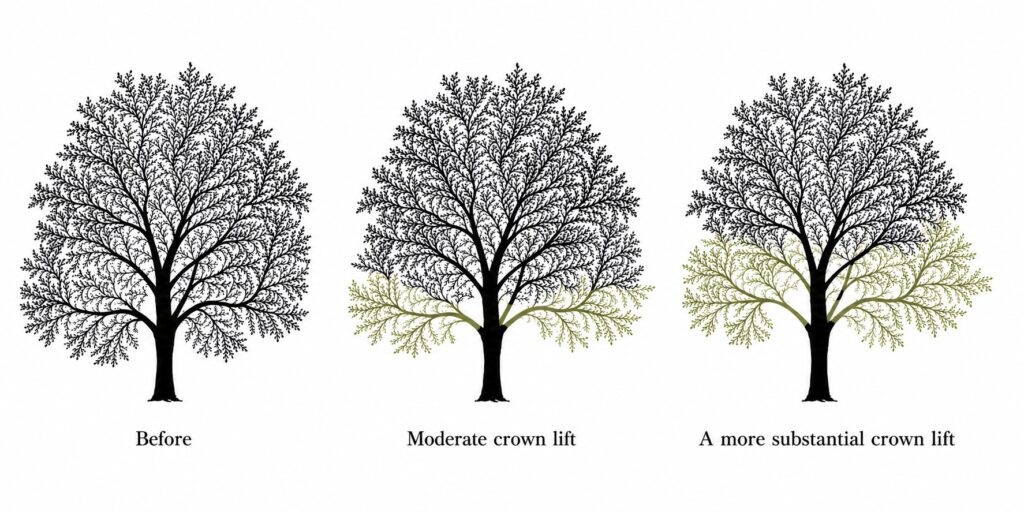
© Crown Tree Services. Diagram showing crown lifting stages.
Crown Reduction
With a crown reduction we reduce the height and spread of your tree through proper pruning practices. The intention is to retain the general form of the tree while reducing its lateral spread and upward growth.
Crown reduction involves the selective and balanced removal of the outermost growth. The aim is not simply to ‘shape’ the tree through indiscriminate cutting, but to reduce overall size working with and preserving your tree’s natural form.
This typically means selecting suitable growth points rather than cutting branches back blindly to follow a predetermined line or shape. Poor reduction can leave a hard outline, spoil the natural form of the existing crown or encourage excessive regrowth if brought back to an unsuitable point. Each cut should be selected with great care.
Crown reduction can help manage a tree that has become too large for its position while still preserving its original form and character.
The diagram below gives a general sense of how crown reduction reduces the size and outline of a tree while retaining its basic form.
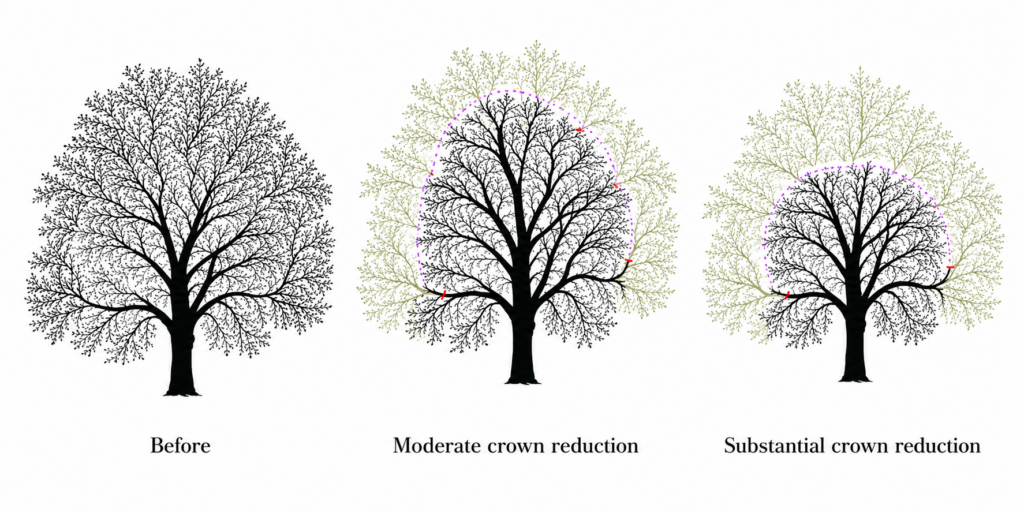
© Crown Tree Services. Diagram showing crown reduction stages.
Crown Thinning
Crown thinning is the selective removal of branches throughout the crown of a tree in order to reduce density while retaining the tree’s overall height, spread and natural outline.
It can be useful where a crown has become congested, where more filtered light is required, or where selected internal branches are crossing, rubbing or contributing to unnecessary weight. It is also worth bearing in mind that different trees naturally carry different crown densities. A fastigiate hornbeam, for example, is naturally more dense and congested since its crown is composed of multiple leaders rather than one or two dominant stems, while a birch will usually have a much lighter, airier crown.
Where trees have been excessively or poorly pruned in the past, they can become congested with reactive regrowth. This growth can sometimes be thinned to improve air movement and light penetration, but it is important not to remove too much in a single pruning session, as heavy thinning can re-trigger the same stress responses that caused the congestion in the first place.
In some cases, reducing crown density may lessen wind loading, although the suitability of thinning will depend on the species, structure and condition of the tree.
Crown thinning should not be confused with simply stripping out the inner crown. Poorly executed crown thinning can leave a tree’s remaining upper-crown material exposed and structurally weaker, sparse, uneven, lion-tailed, with too much foliage retained only at the branch ends. The aim is to select branches carefully so the crown remains balanced, natural and structurally coherent.
The diagram below gives a general sense of how crown thinning reduces crown density while retaining the tree’s overall outline.
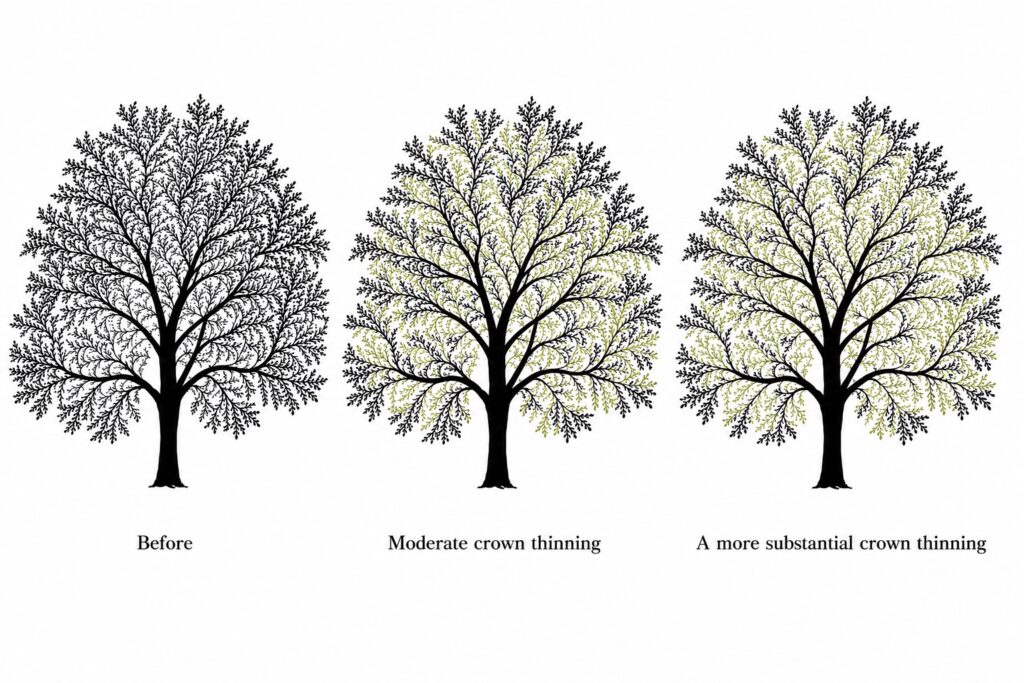
© Crown Tree Services. Diagram showing crown thinning stages.
Overhanging Branch Cutting
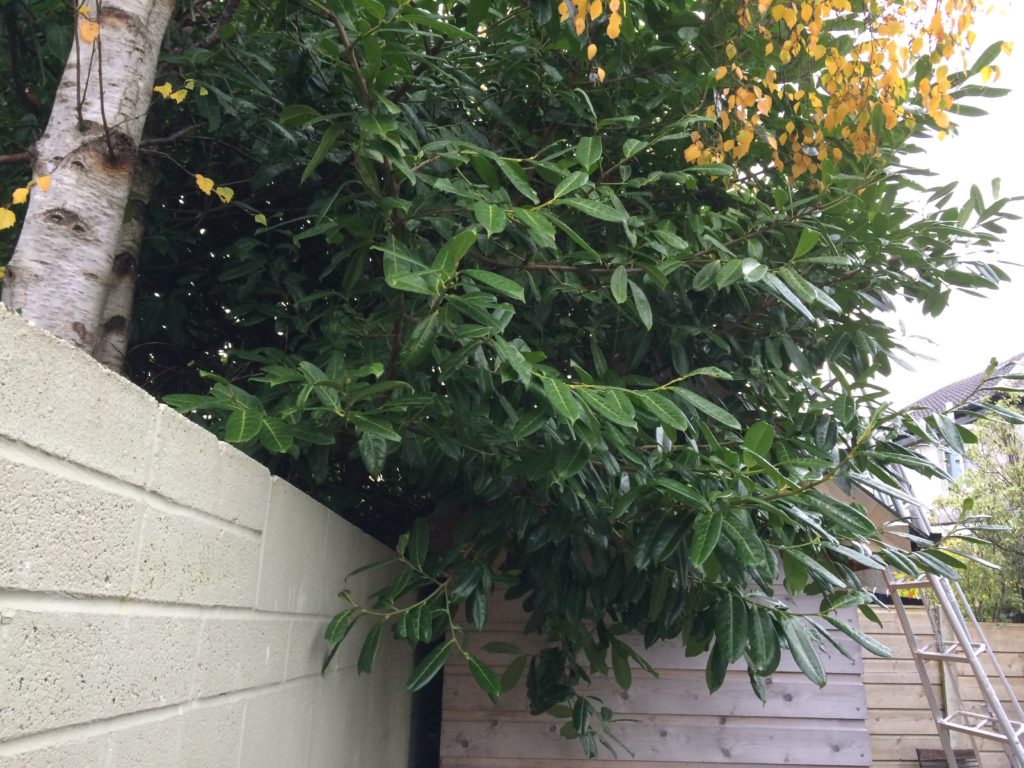
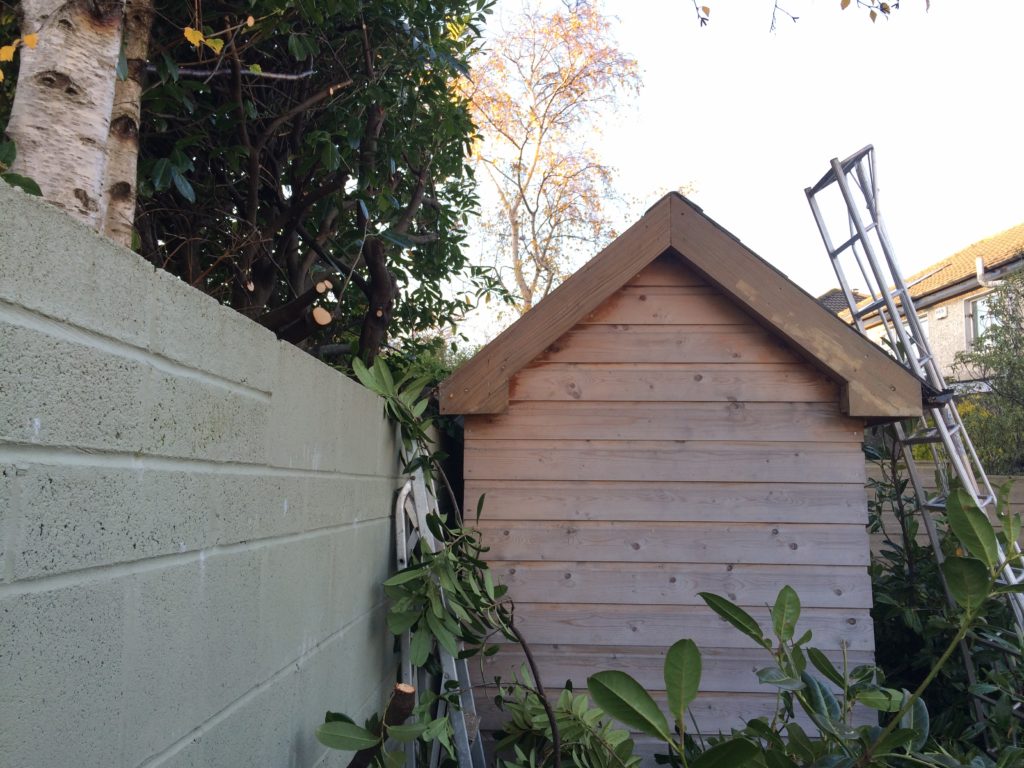
We cut back neighbouring branches that encroach into your garden. When branches encroach into your property, we can prune them back to your side of the boundary line where appropriate.
This may be useful where branches are overhanging lawns, paths, sheds, roofs, driveways or planting areas, or where growth from a neighbouring tree is reducing light or taking up usable space in the garden.
Branches should not be cut beyond the boundary line without the tree owner’s permission, and access to a neighbour’s property must also be agreed in advance. Any pruning should be carried out in a way that does not make the tree unsafe, unstable or unnecessarily damaged.
You must offer trimmings and timber back to the owner. Remember, they are under no obligation to receive this material and may decline it if they wish.
Cut material technically belongs to the tree owner and should be offered back to them. However, it is against the law to either remove or return trimmings to your neighbour’s property without their permission. If the owner does not want the cut material, it should be removed and disposed of responsibly rather than left or returned without agreement.
Try to engage them in a courteous dialogue before work is carried out. This can help avoid disagreement over access, disposal of cut branches, and how far larger overhanging limbs should be pruned back.
Please visit https://treecouncil.ie/tree-advice/trees-law/ to learn more about tree law where boundaries are concerned, or contact us for more details.
Hedge Cutting Services
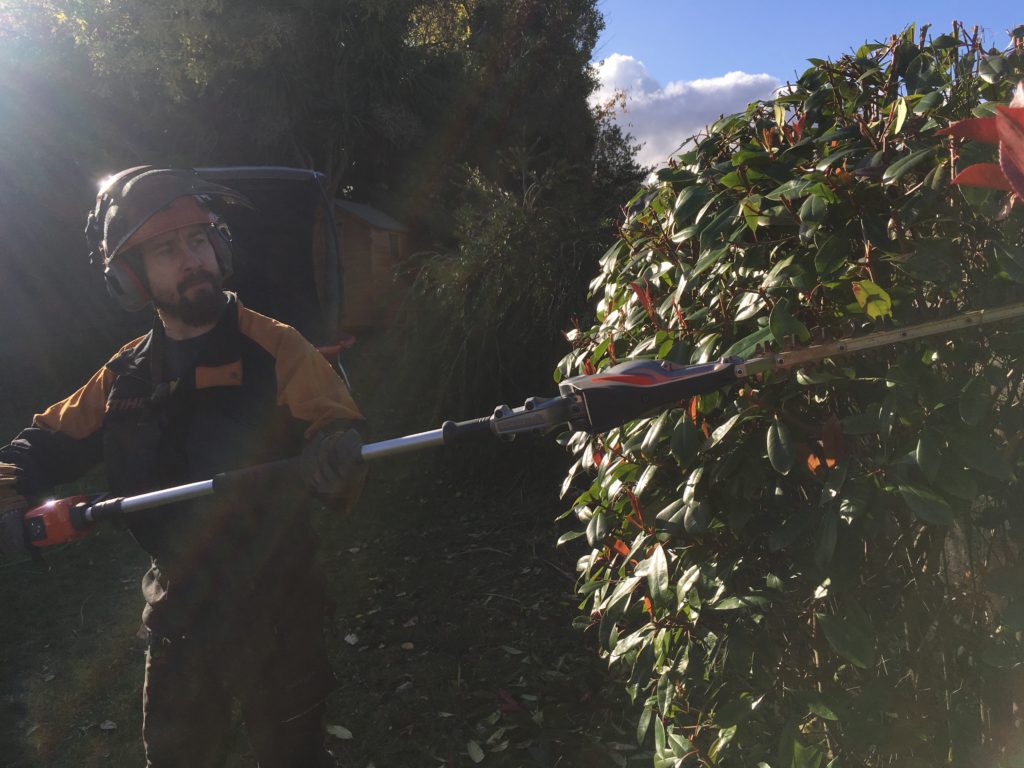
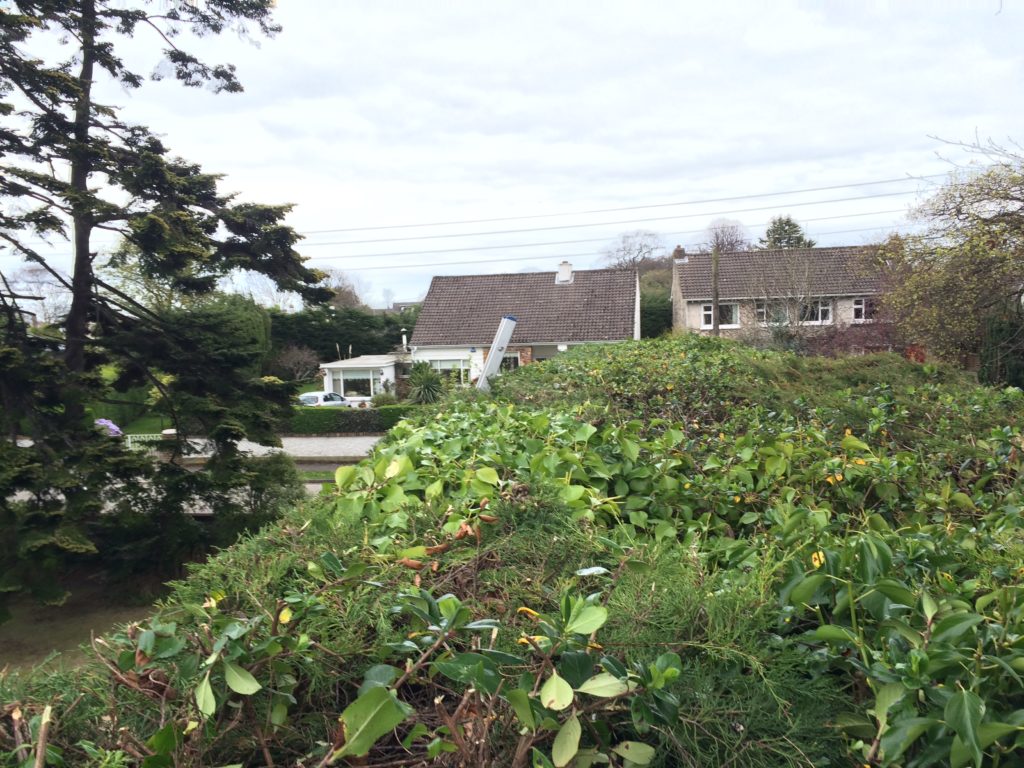
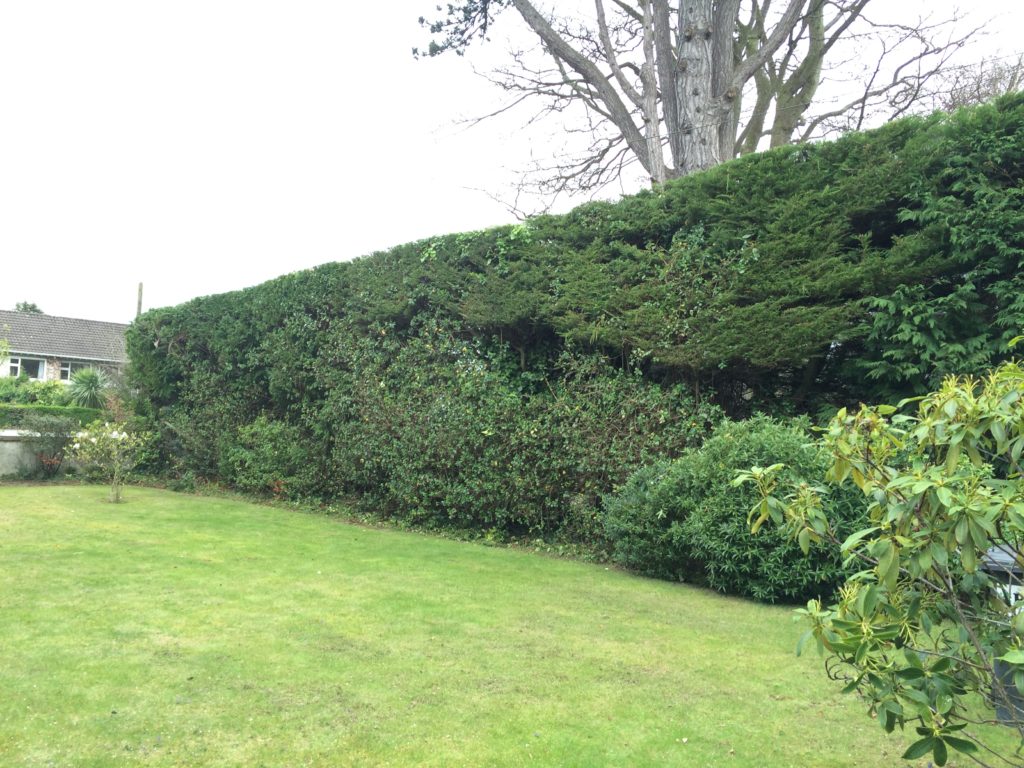
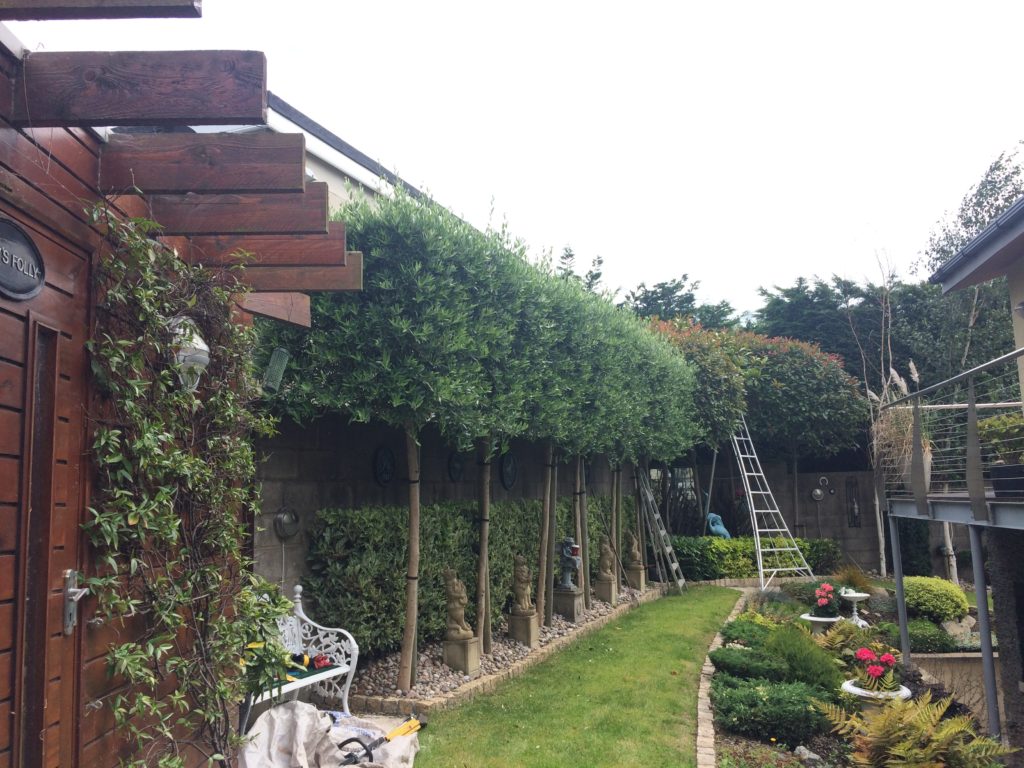
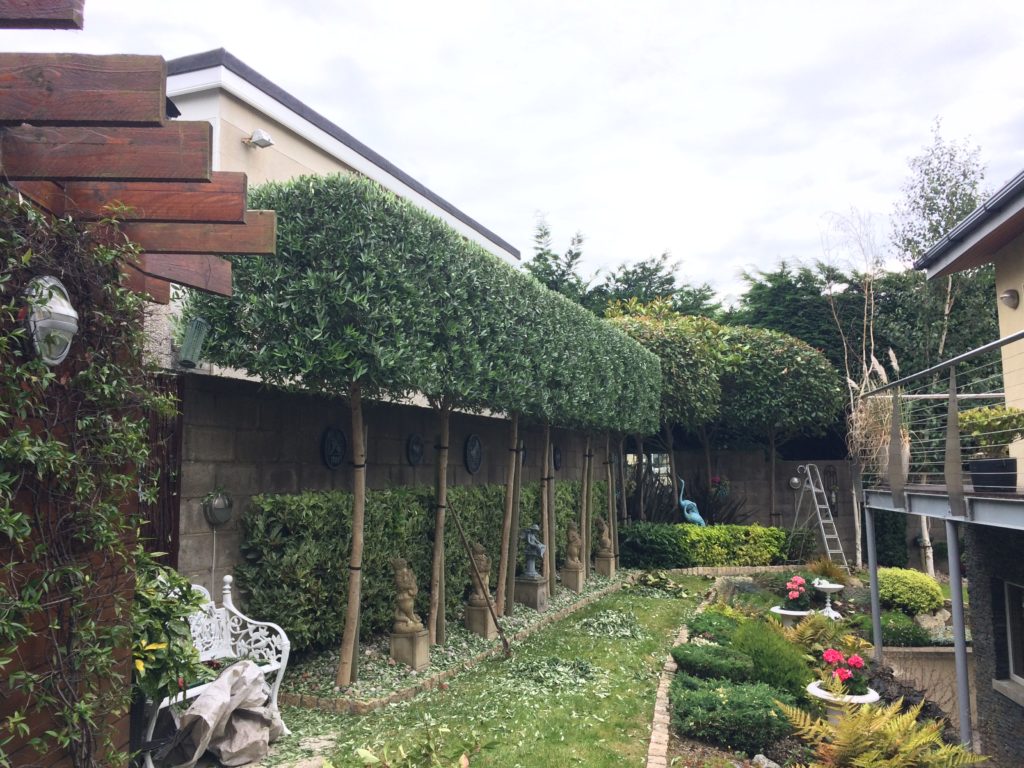
Hedge cutting may involve reducing height, managing width and depth, reshaping or routine maintenance, depending on your requirements, the species, condition and previous management of the hedge.
The timing and extent of hedge work matters. A hedge that has been regularly maintained over time may only need trimming to retain shape, while an overgrown hedge may require staged reduction if height or depth needs to be brought back more substantially.
Not all hedging plants have the same tolerance to pruning. Photinia, including the commonly planted Red Robin, can look very well when healthy, but frequently die back or become patchy if cut too hard or at the wrong time of year. Reclaiming space from an encroaching Red Robin hedge is likely to be less successful than reclaiming space from the more robust privet, griselinia or Portuguese laurel.
Hedge work is planned with regard to nesting birds and where active nests are present, cutting may need to be delayed. This is especially relevant where heavy reduction, hedge removal or cutting into dense structural growth is being considered.
Light maintenance trimming of annual regrowth is generally less disruptive than cutting into the structure of the hedge, where nesting birds are more likely to be found. More substantial work, such as a hedge height reset, depth reset or hedge removal, is carried out after the nesting season between 1st September and 28th February.
For more on our approach to hedge reduction, hedge removal and nesting birds, please see the relevant section on our About page.
Tree Removal Services
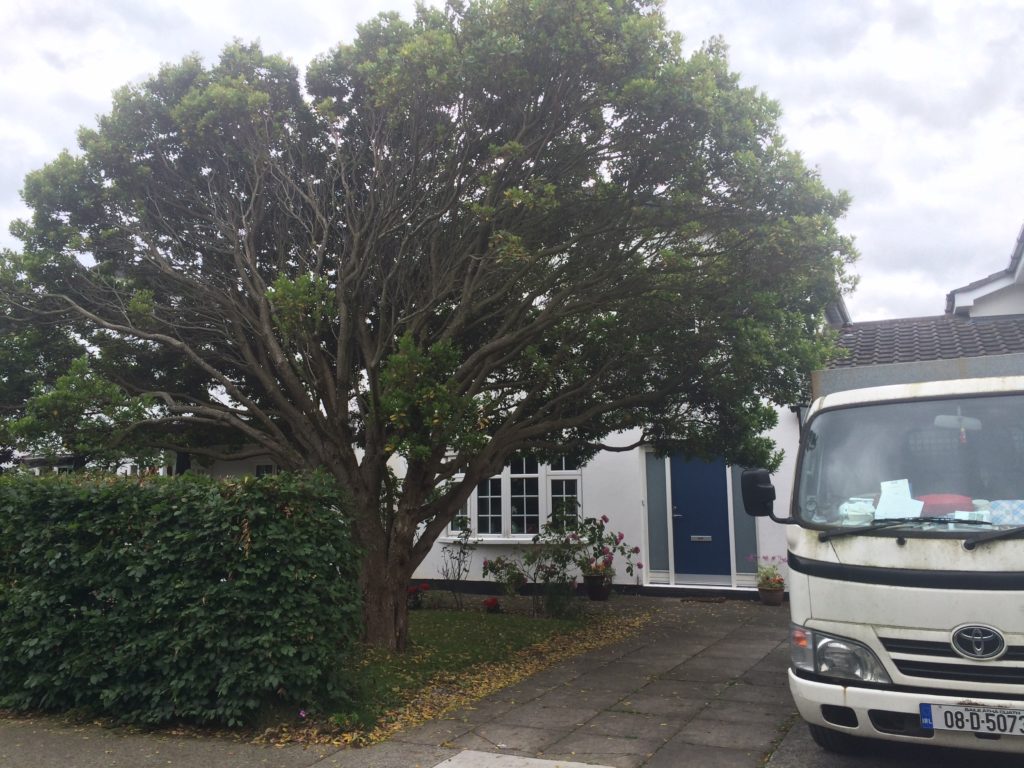
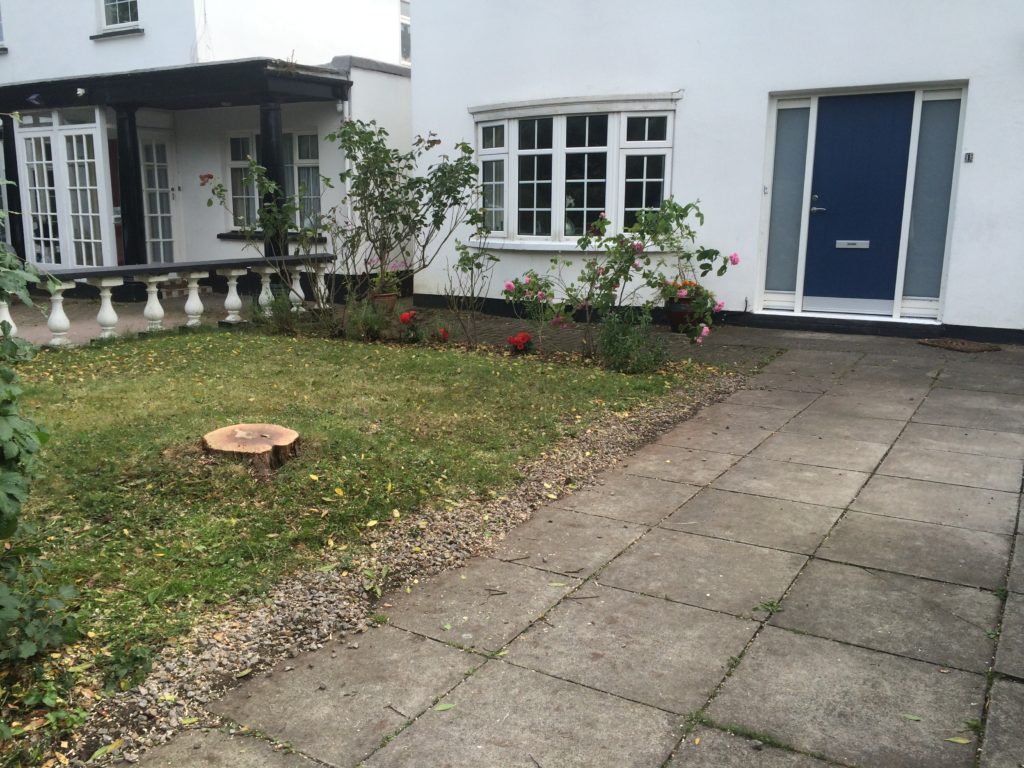
Tree removal involves dismantling a tree to ground level and also generally removing the resulting material. Where a tree cannot be safely felled in one piece, it may need to be dismantled in sections, with branches, brash and timber stacked, shredded or loaded and removed as the work progresses.
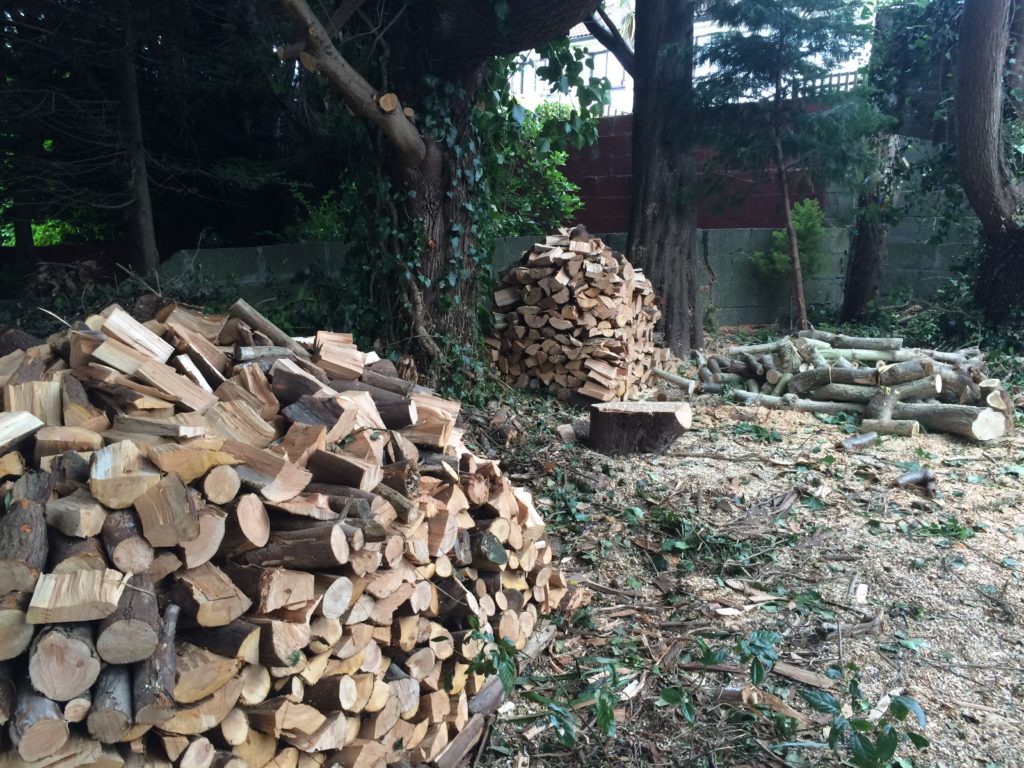
Timber is typically removed but do let us know if you’d like to keep it as firewood. Crown Tree Services also provide log splitting for an additional fee.
We remove small, medium and large-sized trees, shrubs, bushes and hedges. Crown Tree Services specialise particularly in small to medium-sized tree removal in domestic gardens, where access, boundaries, ornamental trees and structures, neighbouring properties and surrounding planting all need to be considered.
Larger tree removals are assessed on a case-by-case basis. The rigging methods used will depend on the size, condition and location of the tree relative to surrounding structures, potential targets etc.
Please note our ethical position on birds during the nesting season. Certain trees may be more likely to contain active nests during the nesting season.
Stump Grinding
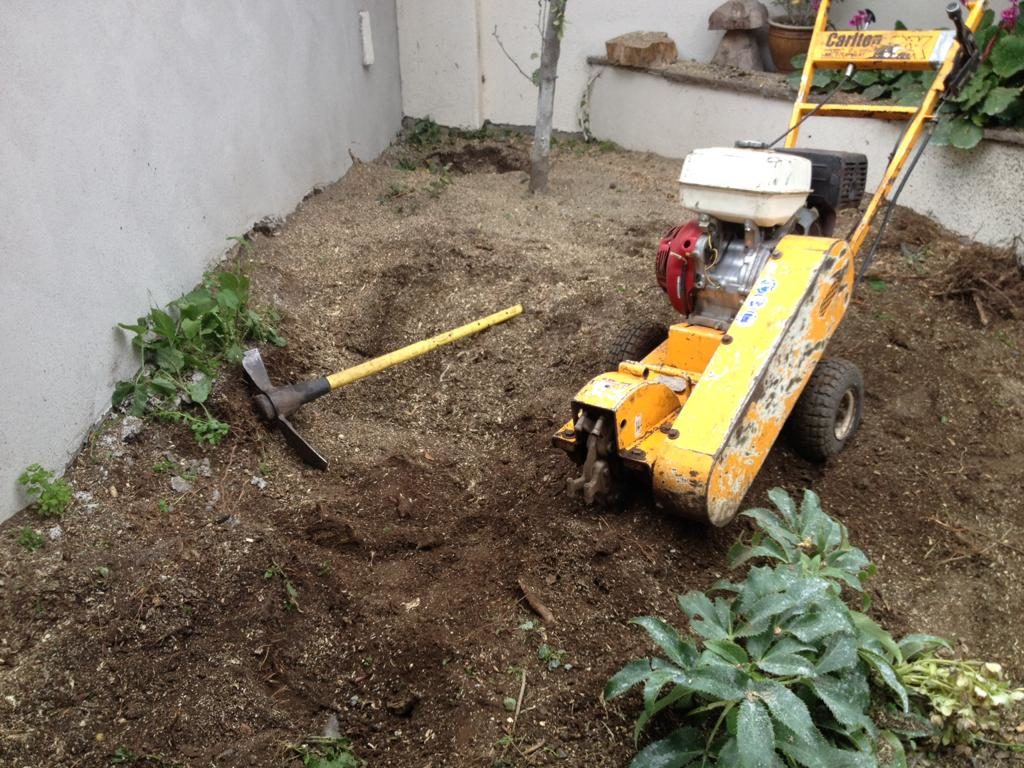
Stump grinding is the subsurface grinding down of a tree stump into smaller fragments and wood chips. Pulp is mixed with the surrounding soil and root material. Typically arisings are left onsite and will rot down over time. Removal of resulting arisings may be available for an additional fee – please ask to discuss at time of enquiry. Stump grinding is a related service and provided by Bill Clarke of Axe Tree Stump Removal. See image below to get an idea of how the soil looks after grinding down a small tree stump.
If you are unsure which service applies, we can advise on the most suitable approach.